
Harold Vickery & Son has been making heavy-duty leather goods in Australia since 1862. We know the story of our founder, James Vickery Snr, mostly through family history. But a Sydney newspaper report from the mid-1860s, titled simply "The Leather Trade", gives us something rarer: a first-hand description of his business in its earliest years.
The report surveyed the tanneries and boot factories that were springing up around Sydney. Among the first businesses it visited was the Glenrock factory and tannery of Mr. James Vickery, of 375 George Street. What it describes is a busy, well-equipped workshop, and a colony that was learning to make its own boots.
Glenrock, on the heights of Waverley
James Vickery ran his business from two sites. His shop was at 375 George Street in the city, where the saddlery and harness making was done by fifteen men. His factory and tannery, which he called Glenrock, stood on the heights of Waverley.
At Glenrock he had built a large stone building specially for the work. The reporter noted that the workshops were laid out so the work could move through them quickly. James tanned and curried his own leather there, then turned it into boots and shoes on the same site.
The tannery was still new. Its pits had been sunk only about eighteen months before the reporter's visit. It had eleven pits for soaking, liming and bating the hides, and nineteen more for the tanning stages known as spenders, handlers and layers. Eleven men worked in the tannery alone.
Inside the boot factory
The boot factory was the heart of the business. It employed 129 people, about a third of them apprentices. Glenrock made riveted and pegged boots, the tough, practical footwear the colony needed most.
James organised the work so that each person did one job well. In the riveting room, one man lasted the boot, another tacked on the soles, a third riveted them, and a fourth fitted the heels. It was an early form of the production line.
The reporter called the machinery "very complete". It included:
- A powerful lever press for cutting sole and heel pieces
- An edge-dressing machine, or rasp, to even up the edges of the soles
- A pricking machine to make the holes for the rivets
- Six pegging machines, recently brought from America, that made a peg, pricked the hole and drove the peg home in a single turn of the handle
- A blocking machine to shape the boot fronts
- A skiving machine to shave down leather where pieces were joined
- Several sewing machines, and an eyelet machine for fitting brass eyelets to the lace holes
A 6-horsepower horizontal steam engine drove the machines. All the engineering work was done on the premises.
In the months before the visit, Glenrock averaged about 1,200 pairs of boots a week. The reporter judged that, running at full capacity, the plant could make more than 2,000 pairs a week.
The men earned about 50 shillings a week, the same as the saddlers in town. Boys earned between 8 and 20 shillings.
A colony learning to make its own
Glenrock was part of a much bigger change. Only a few years earlier, New South Wales had imported most of its boots from England, worth more than £30,000 a month. By the time of the report, local factories had cut those imports to around £7,000 or £8,000 a month.
The reason was leather. Hides and tanning bark were plentiful in the colony, so good leather cost far less than in England. The reporter explained that the more leather and the less fiddly handwork a product needed, the better colonial makers could compete. Heavy men's boots, wellingtons and elastic-sided boots had driven imported goods of those kinds out of the market.
The same was true of saddlery and harness. Bush customers were happy to pay a little more for colonial work, because they trusted both the leather and the stitching. Local makers supplied nearly all the cart harness in use. They also refined their riding saddles, suggestion by suggestion, to suit the people who rode in the bush.
Most of the boots made in Sydney left the city. They went to the interior, to Victoria and Queensland, and across to New Zealand. Government contracts that had once gone to English suppliers were now won by Sydney makers, in open competition.
That principle still guides us today: plenty of good leather, honest construction, and products made for Australian working conditions.
Four generations of Vickery leather
James Vickery Snr was an English migrant who came to Australia with a plan to make the best leather goods he could for Australian businesses and families. He founded the company in 1862. Over the following years his work earned a reputation, and some of the finest leather goods in Sydney could be seen at his premises in Saywell Street, Chatswood.
His son Harold followed him into the trade. By 1917 Harold was head of the company. He renamed it Harold Vickery & Son and moved it to larger premises in Dunning Avenue, Rosebery.
By 1948 Harold's son, Jim Vickery, had taken over. Jim widened the company's distribution and made it a specialist in large-scale production for government departments, much as the Sydney makers of the 1860s had won government contracts from English suppliers. Under Jim, Harold Vickery & Son also became well known for the Vixtan baby harness.
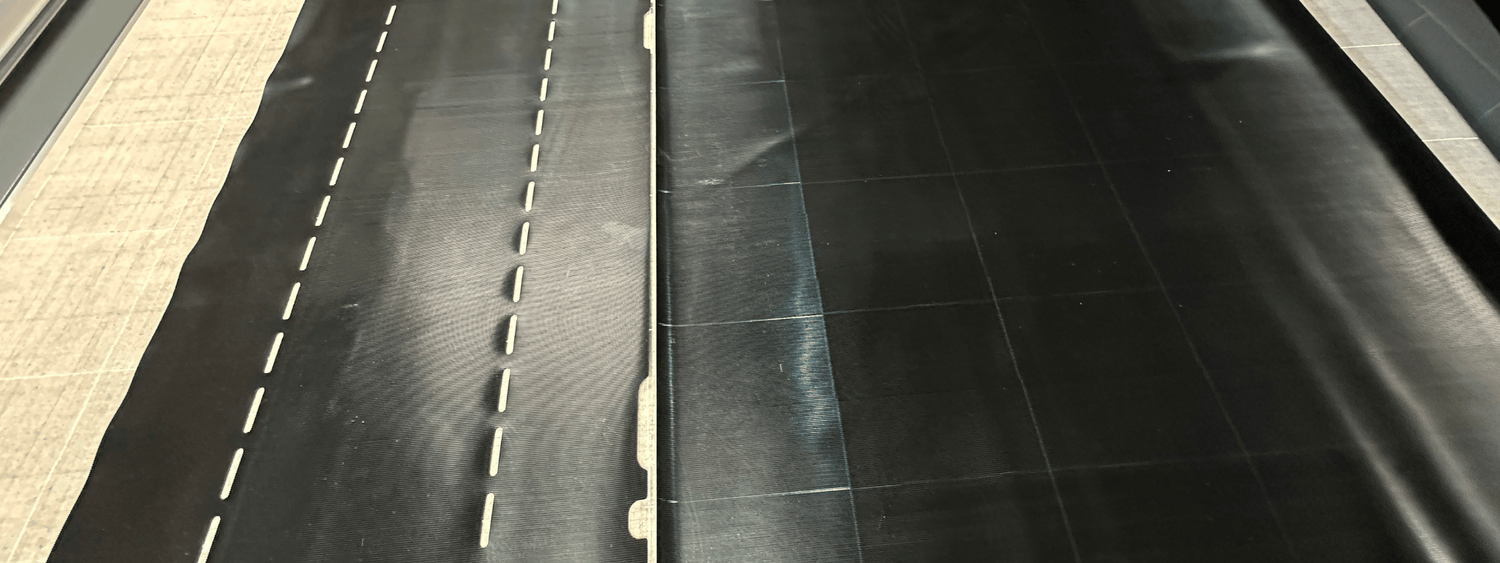
Today we work from our factory in Port Macquarie on the NSW Mid North Coast. Our catalogue runs to more than 480 items, each hand finished in Australia. We make belts, bags and pouches for mining, construction and engineering, including our Miners Back Support belt, cut from a single length of leather. Alongside the leatherwork, we offer contract cutting on a 2 x 3 metre CNC machine.
Some of our tools would look familiar to James's workers at Glenrock. We still use clicker presses, a knife splitter, riveters and eyelet machines.
Still made to last
More than 160 years after that reporter walked through Glenrock, the idea behind the business hasn't changed. James Vickery built his factory on good Australian leather and practical goods for hard work, and we're proud to carry that on.
If you need heavy-duty leather gear, a custom product made from one of our 400-plus patterns, or contract cutting, get in touch. You can also browse our collection or call us on 02 6585 3966.
Sources
1868 'THE LEATHER TRADE.', The Sydney Morning Herald (NSW : 1842 - 1954), 6 November, p. 5. , viewed 25 Sept 2026, http://nla.gov.au/nla.news-article13175434